
There is a particular feeling that comes with a garden that's been properly thought through. The kind of outdoor space where you linger longer than planned, where morning coffee turns into an hour with a book, where friends don't want to head inside when the evening cools.
The spirit behind the trends this year, is championing spaces that are considered, layered and genuinely built for living. Here is a look at what is shaping UK gardens, and how to bring it home.

Colour Trends for 2026: Deeper, Richer and Rooted in Nature

Warm Neutrals as the Foundation
Warm, earthy tones are increasingly replacing cooler grey palettes as the go-to base for outdoor schemes.
Putty tones, soft stone, sandy beige and clay are establishing themselves as the new outdoor base colours, in hard landscaping, furniture and accessories alike. They work because they blend into the garden as opposed to standing out within it. Calm, cohesive and endlessly versatile, these are the shades that bring everything together in your outdoor scheme.

Terracotta - Bolder and More Expressive Than Ever
Terracotta is deepening this season, moving beyond softer, more tentative iterations into burnt terracotta, warm rust and amber — shades with real drama and presence.
A colour that adds depth to outdoor textiles, ceramics and planters, it anchors a garden scheme with genuine warmth.

Botanical Palettes like Olive, Sage, Moss and Deep Green
One of the most notable shifts in garden colour trends this year is the move towards a full botanical palette, a family of greens pulled directly from the British landscape.
Olive, sage, deep moss, forest green: these tones create outdoor spaces that feel genuinely connected to their surroundings, effortlessly elegant without trying too hard. These tones pair naturally with warm neutrals and aged wood, and layer together with the kind of depth you'd expect from a well-dressed interior.
One of our favourite parasols this season, the Platinum Riva Olive, is a beautifully considered entry point into this palette. It’s a rich, grounded shade that anchors an outdoor dining setup without overpowering it.

Wine, Plum and Rust Accent Tones
Deeper accent tones are also gaining ground: wine reds, dusky pinks, plum, rust, berry.
Used sparingly across cushions, throws, ceramics and accessories, these deeper shades bring warmth and visual intrigue without disrupting the overall scheme.
Alongside the botanical greens and warm neutrals that anchor everything, they give a garden the kind of layered, considered feel that really elevates the space.
Material Trends: Natural, Sustainable and Built to Last


Authenticity Over Aesthetics with Natural Wood
Natural wood is seeing a strong resurgence in garden design, with a growing preference for materials that feel grounded and authentic.
Teak and acacia remain the standout materials for outdoor furniture, valued for their durability, weather resistance and longevity. The way natural wood is being used has evolved: cleaner lines, quieter detailing, finishes that let the grain do the work.
If you're investing in outdoor furniture this year, it's worth noting Ruma’s wooden outdoor pieces come from a supply chain with responsible forestry management at their heart, a quiet assurance that it’s been sourced with care and respect.
The Leros Outdoor Seating Set captures this mood with ease. Clean-lined and considered, sitting beautifully within the natural wood moment at home. Perfect for either a contemporary garden design yet providing a relaxed and personal aesthetic.

Sustainability and Provenance as Design Values
Sustainability is the defining context for almost every material trend in garden design right now.
Reused stone, reclaimed timber and responsibly sourced wood are increasingly the first choice for designers and homeowners who want gardens that feel as good as they look.
The thinking is simple: buy fewer things, buy better things, buy things that will still be beautiful in ten years. For outdoor living, that means investing in pieces built for longevity rather than replacing season after season.
Outdoor Spaces for Proper Living


Soft Landscaping Over Hard
One of the quieter but significant shifts in garden design this year is the move away from wall-to-wall paving towards softer, more permeable surfaces. More planting, more open soil, hard landscaping used with intention rather than as a default.
It's a trend that makes sense on every level, environmentally, practically, and aesthetically. Gardens that breathe feel better to be in, and they're often more affordable and adaptable over time too.
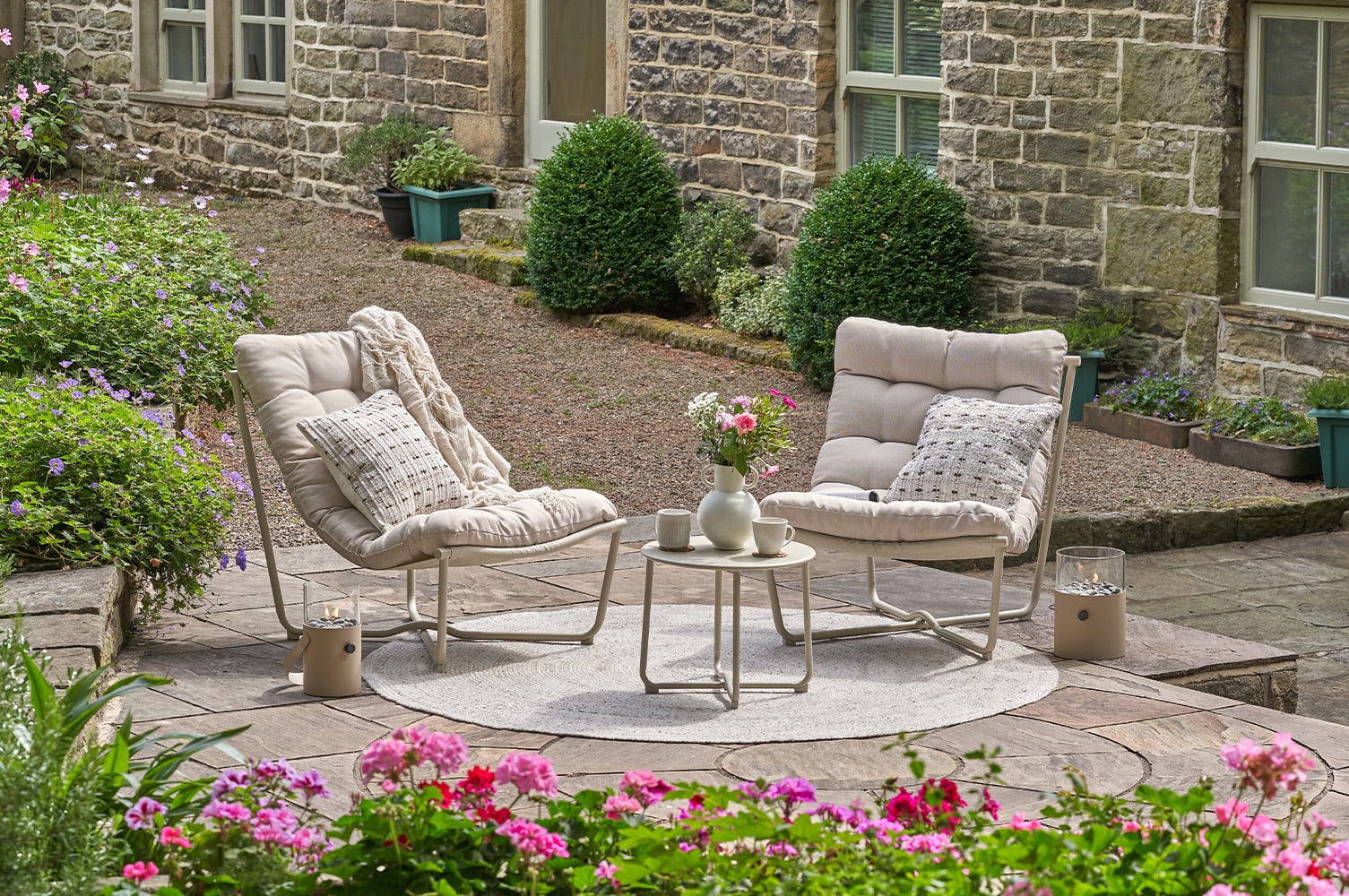
Multi-Zone Gardens - One Space, Many Moods
This is the layout idea that's reshaping how people think about their gardens. Rather than one large, undivided patio, outdoor spaces have become more of a collection of smaller, purposeful spaces like a dining area, lounge around a firepit, and perhaps an outdoor kitchen tucked in somewhere out of the way.
It's an approach borrowed from interior design where a space feels more layered, more intentional, and far more liveable.
The Cavallino Putty Outdoor Lounging Set was made for exactly this kind of thinking. Low-slung and effortlessly relaxed, it defines a lounging zone, somewhere to sink into after dinner, or settle into with a coffee before the day begins.
The putty colourway is a natural companion to the warm neutrals and deeper terracotta accents of the season.

Alfresco Dining - Making the Table the Heart of the Garden
Alfresco dining has moved from a nice-to-have to the emotional centre of the outdoor space. The focus is on creating setups that feel genuinely inviting, the kind of table you'd linger around from an early supper through to the last of the evening light.
Shade plays a bigger role in this than it might seem: a thoughtfully placed parasol makes a dining somewhere you might want to sit for the afternoon. The Platinum Riva Olive Round Parasol is a great example that does this beautifully, showcasing a seasonal colour at the same time.
Frequently Asked Questions About Garden Design Trends 2026

What are the key garden colour trends for 2026?
The dominant garden colour trends for 2026 are built around a botanical palette: olive, sage, deep moss and forest green, grounded by warm neutrals like putty and stone. Terracotta is trending in bolder, more expressive forms such as burnt terracotta, rust, warm amber, and deeper accent tones like wine red, plum and berry are increasingly appearing across outdoor textiles and accessories.

What is the outdoor living trend for 2026?
The overarching outdoor living trend for 2026 is the garden as a true extension of the home purposefully designed, multi-zoned and built for real life. Outdoor dining, defined lounging areas, smart lighting and softer landscaping all reflect a shift towards spaces that are as intentional and considered as the best rooms inside your house.

How do I create a multi-zone garden?
Start by thinking about how you want to use the space (is it dining, lounging, cooking, growing?) and map out zones based on your garden's shape. Use furniture groupings, planting, outdoor accessories and lighting to define each area. Even a single clear decision, like separating your lounging set from your dining table, can transform how a space feels and functions.
Create Your 2026 Garden with Ruma
The thread running through every trend this year is the same one: a garden that's worth being in. Layered colours, materials chosen with intention, layouts that give every corner a purpose.
It all adds up to an outdoor space that feels as curated and comfortable as inside your home. For more ideas and inspiration, look at Ruma's Outdoor Living Collection, curated pieces that can bring your ideas to life, beautifully.